

A song does not need to arrive finished. It needs a strong centre and a process that knows how to develop it.
A full production is not everything playing all the time. It is a narrative.
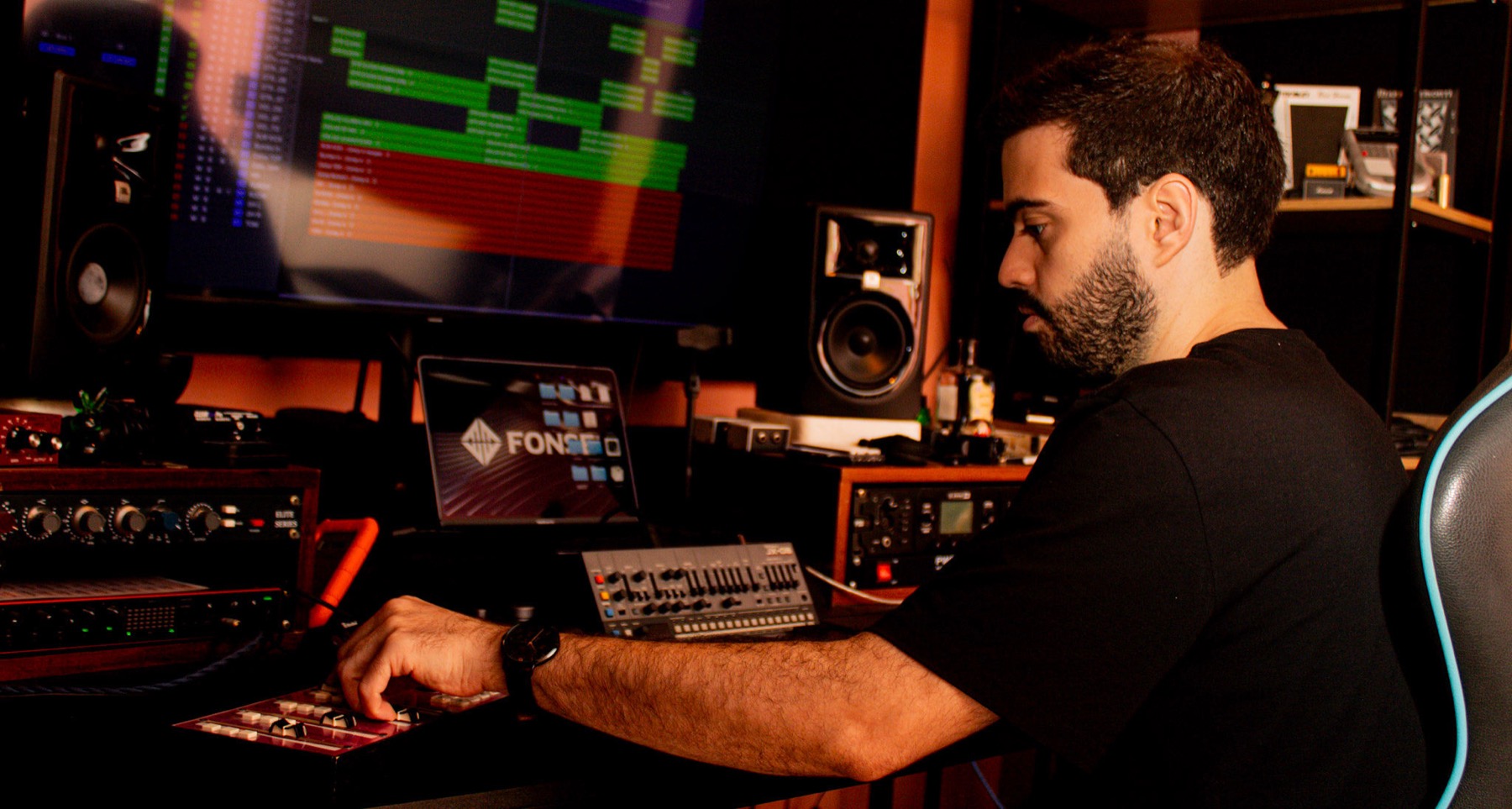
A song does not need to be born finished.
Many strong records begin with voice and guitar, piano and vocal, a phone recording, a chorus idea or a lyric still looking for its melody. Starting simply is not a weakness. It often makes the centre of the song easier to hear.
The complete production comes later, and it needs direction.
Begin with the emotional intention
Before choosing drums, guitars, synths or effects, ask one question: what should this song make the listener feel?
Two songs can share the same chords and require completely different productions. One may need intimacy and air. Another may need tension and release. One may belong to an organic band; another may become more honest through electronic textures.
The sound should grow from the intention rather than from habit.
Test the song without decoration
Before dressing the composition, listen to it in its simplest form. Does the melody hold attention? Does the lyric communicate? Is the chorus memorable? Does the structure create movement? Is the key right for the voice?
Useful questions include:
- Does the verse lead somewhere?
- Does the pre-chorus create anticipation?
- Is any section longer than it needs to be?
- Does the emotional energy grow?
- Is the tempo helping the phrasing?
- Can the singer communicate naturally in this key?
Resolving these questions before heavy recording saves time and gives the production a stronger foundation.
Draw the energy map
A production needs a sense of scale. Where does it begin small? Where does it open? Where does it hold tension? Where does it breathe?
If every element enters immediately, the song has nowhere to go. The first verse may need a close vocal and one instrument. The pre-chorus can introduce movement. The chorus can open with the rhythm section. The second verse can return with a new texture, and the bridge can change the listener's expectation.
A full production is not everything playing all the time. It is a narrative.
Give every arrangement choice a function
Arrangement is not decoration. Each element should perform a role.
The bass can support weight and harmony. Drums define body and forward motion. Guitars can create pulse, tension, width or aggression. Piano may carry emotional gravity. Synths can create atmosphere and depth. Backing vocals can answer, expand or support the lead.
When two elements do the same job in the same range, clarity disappears. Good arrangement is as much about leaving space as it is about writing parts.
Build a coherent sonic palette
The choice of sound is part of the arrangement. A bright piano and a darker piano play the same notes but tell different stories. A dry drum kit creates a different distance from a wide ambient kit. A vocal with close detail feels different from one surrounded by a large reverb.
Choose a limited palette that belongs to the emotional world of the song. Consistency helps the production feel intentional rather than assembled.
Record for emotion and precision
Once the direction is clear, recording becomes more efficient. The artist knows what each section needs to communicate, the musicians understand their role, and the session has a reason behind every take.
Direction may involve vocal phrasing, dynamics, doubles, harmonies, guitar articulation, drum energy and the relationship between parts.
The goal is not sterile perfection. It is a performance that carries truth while giving the mix enough control to finish the record well.
Editing, mixing and mastering complete the story
Editing should preserve groove and naturalness. Mixing creates hierarchy, space, impact and translation. Mastering prepares the final record for release without undoing the emotional dynamics built earlier.
These stages cannot rescue a composition or arrangement that never found its direction. They reveal and complete decisions made throughout the process.
A simple song becomes a full production through a sequence of clear choices: intention, composition, energy, arrangement, sound, performance and final delivery. Complexity is optional. Coherence is not.
Next step
Do you have a voice memo, guide or demo that needs to become a finished record?
Send the starting point. We can define the right production path from there.